Who is this for?
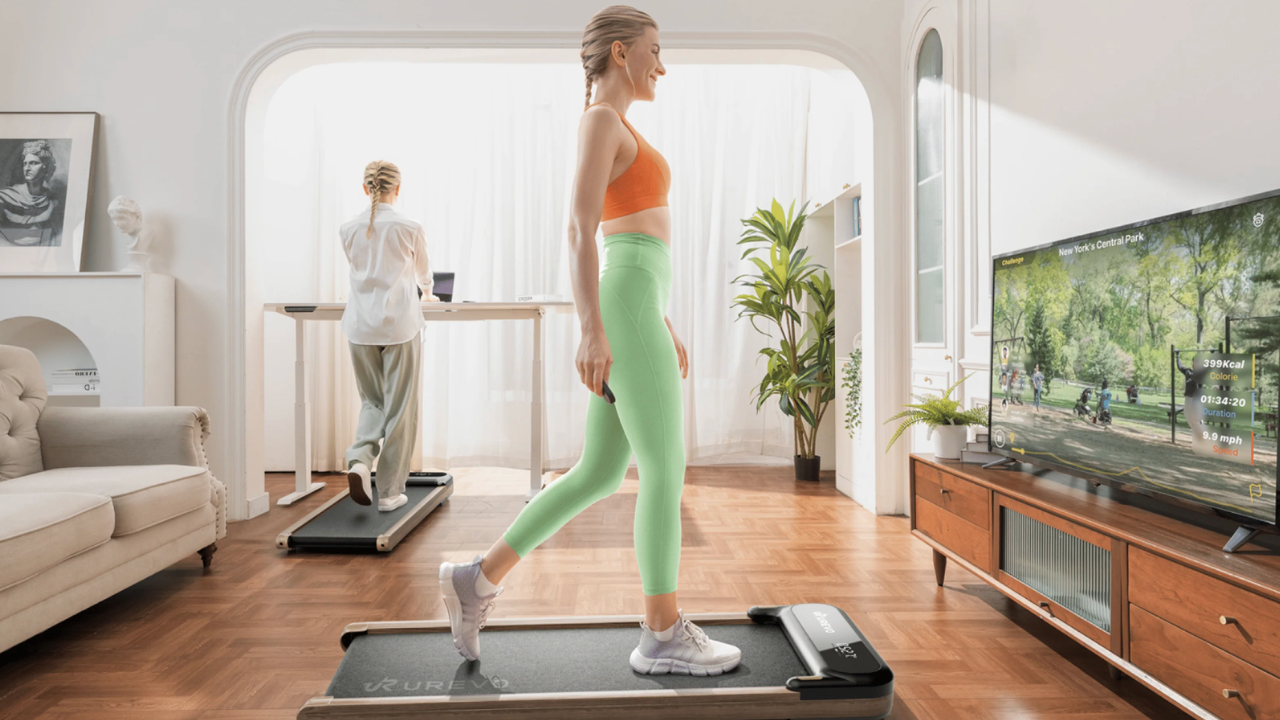
If you live in a flat, share walls with neighbours, or work from home in the same room other people relax in, this guide is for you. It explains what walking‑pad noise feels like in real life and when a walking pad actually fits into a small or shared space.
Walking at home sounds simple in theory. In practice, it rarely is.
Not because walking is difficult, but because the environments people live in are not built for it. Apartments share walls. Floors carry vibration. Workspaces double as living spaces. Someone is usually nearby—on a call, resting, sleeping, or simply trying to exist in the same room.
So when people look at walking pads, the question isn’t just “does it work?” It’s:
“Can I use this without disturbing the people around me?”
That question doesn’t get answered clearly on most product pages. You’ll see phrases like “low noise” or “quiet motor,” but those descriptions rarely reflect what the experience actually feels like in a real home.
Because noise isn’t just a number. It’s a combination of sound, vibration, timing, and context.
This article breaks that down in a way that actually helps you decide whether a walking pad fits into your space—not just on paper, but in daily life.
Why “Quiet” Is Harder to Define Than It Sounds
Most people expect a simple answer. Something like:
- “This is quiet”
- “This is loud”
Instead of one single “quiet” or “loud” label, walking‑pad noise is really a mix of three things: the motor’s hum, the impact of your footsteps, and how much vibration travels into your floor and walls.
But walking pads don’t work that way.
Even the quietest walking pad still makes sound. There’s a motor running, a belt moving, and footsteps repeating in a steady rhythm. The difference is not whether noise exists—it’s how that noise behaves.
Larger folding treadmills are not automatically louder. The KingSmith WalkingPad TRX21F runs a brushless motor with a shock-absorbing deck and EVA cushioning, and its tri-fold frame stands upright in about 0.16 m² of floor space.
There are three parts to it:
1. Motor Sound
This is the base layer. A continuous hum created by the machine running.
2. Footstep Impact
This depends on how you walk and how the surface absorbs your steps.
3. Vibration Transfer
This is what travels into the floor and walls—often the part people notice the most in apartments.
A walking pad can be “quiet” in one of these areas and still feel disruptive in another.
That’s why real-world experience matters more than specifications.
What “Quiet Enough” Actually Means in a Shared Space
The goal isn’t silence. It’s predictability and containment.
In most apartments, a walking pad is considered quiet enough if:
- the sound stays consistent
- there are no sharp or sudden noises
- vibration doesn’t travel noticeably through the floor
- it blends into normal daytime activity
This is very different from something being silent.
A refrigerator hums. A fan runs. A laptop makes noise under load. These are all acceptable because they are stable and expected.
A walking pad fits into that same category when it’s designed well.
How Walking Pads Compare to Traditional Treadmills
This is where most confusion starts.
People often assume walking pads are just smaller treadmills. They’re not.
Traditional treadmills are built for:
- running
- high speeds
- impact absorption at force
That creates:
- louder motors
- heavier frames
- more vibration
Walking pads are built for:
- walking only
- controlled speeds
- continuous use in smaller spaces
This changes everything.
The motor is quieter. The frame is lighter. The impact is lower.
The result is not silence, but a much more contained experience.
What the Sound Actually Feels Like
Descriptions like “quiet” don’t help unless you can imagine them.
So here’s what a typical walking pad sounds like in a real room:
- a low, steady hum underneath everything
- soft, repetitive footfalls
- no sudden spikes or mechanical clicks
It doesn’t dominate the space. But it is present.
If someone is:
- watching TV
- working on a laptop
- talking casually
…it usually blends in.
If someone is:
- sleeping
- on a quiet call
- in a silent room
…it becomes noticeable.
That’s the difference.
The Role of Speed (This Matters More Than People Think)
Noise isn’t static. It changes depending on how you use the machine.
At lower speeds:
- foot impact is lighter
- vibration is minimal
- motor sound is softer
At higher walking speeds:
- steps become heavier
- rhythm becomes more pronounced
- vibration increases slightly
This is why most walking pads are best used as slow-to-moderate movement tools, not high-speed cardio machines.
The quieter experience comes from how they are used—not just how they are built.
Real Differences Between Popular Walking Pads
Not all walking pads behave the same, even if they look similar.
Let’s break this down in practical terms.
Standard walking pads (balanced everyday use)
Standard walking pads are built for general, everyday use. They offer a more natural stride, a stable walking surface, and balanced noise levels that usually fit well into living rooms and home offices.
If your main goal is normal‑pace walking while you work, watch TV or read, a standard walking‑pad guide is the best place to start, because it focuses on machines designed for sustained walking rather than running.
Foldable walking pads (flexible living spaces)
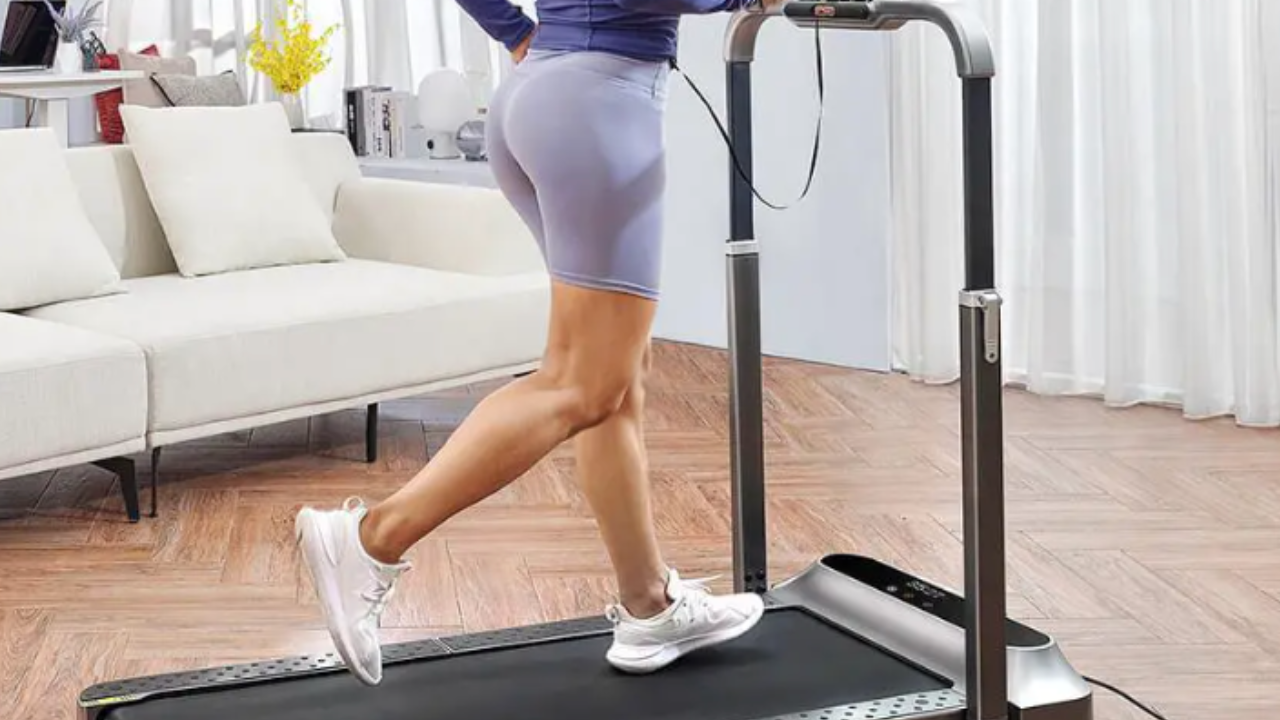
Foldable walking pads add a different dimension: storage. In terms of sound, they usually have a similar motor profile and walking experience to standard pads, but a folding frame can introduce slightly more structural movement.
If you want something that can live in the living room without becoming permanent furniture, a foldable model like the WalkingPad R2 Foldable Treadmill is a good example of this category: compact, easy to store, and designed for quiet walking in shared spaces.
Compact Walking Pads (Tight Space Use)
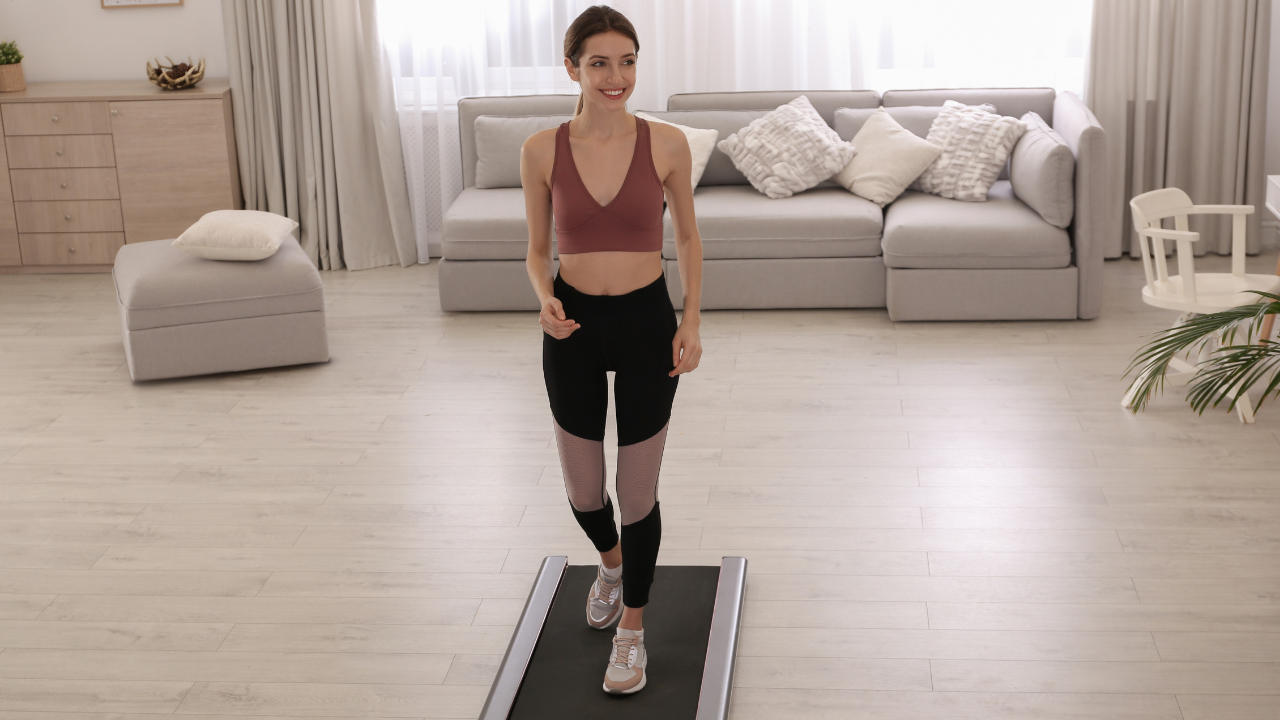
Compact walking pads prioritise a smaller footprint and shorter stride so they can fit into very tight spaces. Because of this, footsteps are more compact and movement is more controlled, which helps keep vibration relatively contained—at the cost of a less natural “full walk” feel.
If you’re trying to fit a machine between a desk and a wall, in a narrow hallway, or in a small bedroom above neighbours, a compact walking‑pad guide can help you compare which ultra‑short models trade a bit of comfort for better space and vibration control.
Why Floor Type Changes Everything
The same walking pad can feel completely different depending on where it’s used.
Hard flooring (tile, wood)
- reflects sound
- transfers vibration more easily
Carpet or mats
- absorbs impact
- reduces perceived noise
In real use, adding a simple exercise mat can significantly change how quiet a walking pad feels—not just for you, but for people below or nearby.
Roommates, Family, and Real-Life Use
This is where theory meets reality.
If you live with others, the question isn’t just:
“Is it quiet?”
It’s:
“When can I use it without affecting someone else?”
Most walking pads are:
- fine during the day
- manageable in shared spaces
- noticeable in quiet environments
That means:
Works well:
- during work hours
- while others are active
- in rooms with background noise
Less ideal:
- late at night
- early morning in quiet homes
- directly above someone resting
This doesn’t make them unusable—it just defines when they fit best.
Why Some “Quiet” Machines Still Feel Loud
This is one of the most common frustrations.
A product is labeled quiet, but in real use, it doesn’t feel that way.
Usually, this comes down to one of three things:
1. Inconsistent sound
Even small changes—like belt shifts or uneven footsteps—make noise feel louder.
2. Vibration transfer
You might not hear it, but someone below you might feel it.
3. Expectation mismatch
People expect silence. What they get is controlled sound.
Understanding this upfront changes how the experience feels.
Walking Pads vs Other Quiet Cardio Options
Walking pads sit in the middle of your quiet cardio system.
- Under-desk bikes → quieter, but less natural movement
- Walking pads → more natural, slightly more noticeable
- Steppers → more intense, more audible
Each one solves a different version of the same problem.
Walking pads are where:
natural movement meets acceptable noise
How to Make Any Walking Pad Quieter
Even a good machine benefits from small adjustments.
1. Use a mat
Reduces vibration transfer dramatically.
2. Control your pace
Slower walking = less impact.
3. Wear proper shoes
Soft soles reduce footstep noise.
4. Place it carefully
Avoid positioning directly above sleeping areas if possible.
These changes don’t eliminate sound, but they make it far more manageable.
What You Should Actually Look For Before Buying
Instead of focusing on “quiet” as a label, look for:
- walking-only design (not running)
- consistent motor sound (not pulsing or uneven)
- stable frame with minimal shake
- realistic speed range for daily use
QuietFit Lab’s QuietFit Lab's walking-pad reviews call out these details explicitly—motor tone, floor vibration, and realistic speed ranges—so you can match a machine to your actual living situation, not just a spec sheet.
And most importantly:
whether it fits your living situation—not just your fitness goals
Final Perspective
Walking pads are not silent machines. They are controlled machines.
They allow movement to exist in environments where it normally wouldn’t—apartments, shared homes, multi-use rooms.
The question isn’t whether they make noise.
It’s whether that noise stays within the boundaries of everyday life.
When they do, they stop feeling like exercise equipment and start feeling like part of a routine.
Bottom Line
A walking pad is quiet enough when it:
- doesn’t interrupt the people around you
- blends into normal daily activity
- allows you to move without needing a separate space
The right choice depends less on the machine itself and more on how it fits into your environment.
Because in shared spaces, the best equipment isn’t the most powerful.
It’s the one you can actually use—without thinking twice about who else is in the room. If you want help choosing one, QuietFit Lab keeps a small set of tested quiet walking pads for flats and shared homes, with notes on noise, floor vibration and best‑fit scenarios, so you can pick something you’ll actually feel comfortable using when other people are nearby.