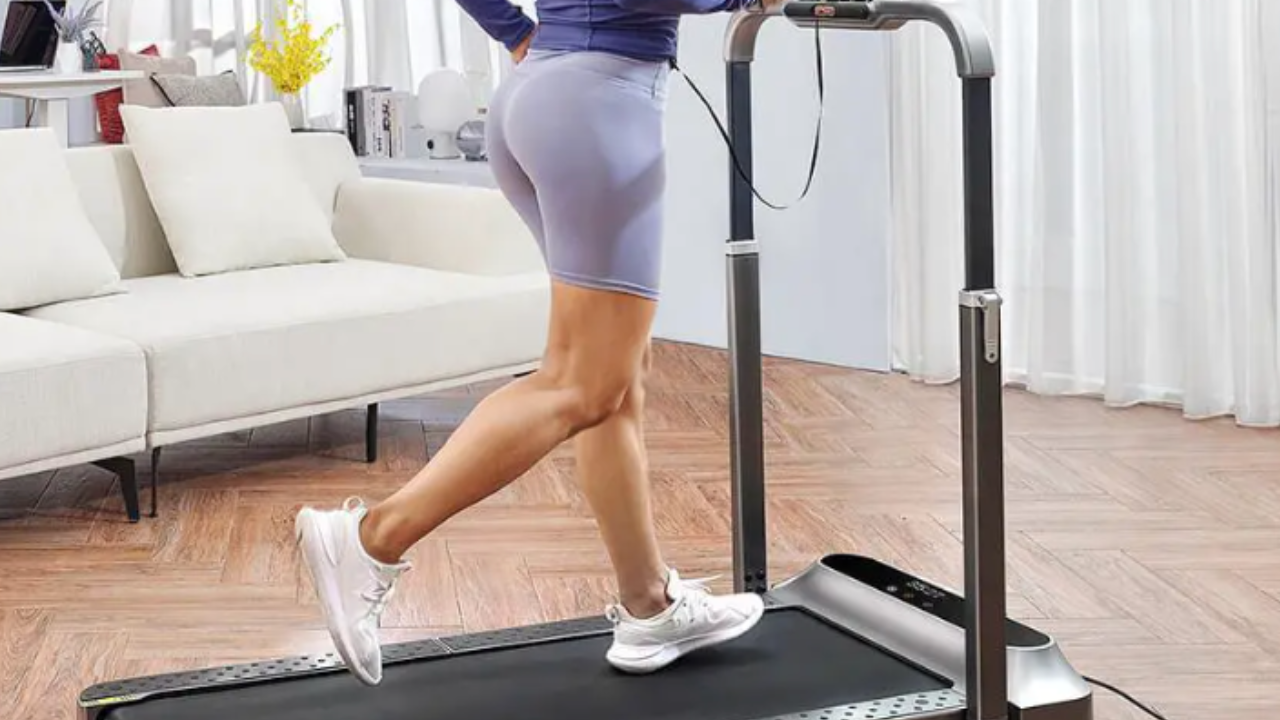
If you want a treadmill you can both walk on under a desk and run on for workouts, but you do not have space for a full-size machine, the WalkingPad R2 is one of the most popular 2‑in‑1 foldable options. It combines a 120cm deck and up to 12 km/h running speed with a double‑fold hinge and upright storage so you can slide it under a bed, sofa or stand it behind a door.
This guide looks at how the R2 fits into small homes and flats, using official specs and independent reviews to focus on noise, footprint, walk/run feel and day-to-day practicality.
QuietFit Lab Snapshot
- Noise level: Quiet
- Apartment-friendly: Mostly
- Vibration level: Low to moderate
- Small-space fit: Excellent
- Best for: People who want one foldable treadmill for both walking and light running
- Not ideal for: Very heavy daily use or users who only need a tiny under-desk pad
The WalkingPad R2 uses a low‑profile deck, brushless motor and folding handrail design to stay relatively quiet while still offering up to 12 km/h for running, so “Quiet”, “Mostly”, and “Low to moderate” are a fair summary for small homes where you want a versatile treadmill that is still neighbour‑friendly at walking speeds.
QuietFit Lab uses affiliate links. If you buy through the links on this page, we may earn a small commission at no extra cost to you. This helps support the site and keeps our reviews independent.
See the WalkingPad R2 Foldable Treadmill
Walking Pad / Kingsmiths own site and different Amazon regions give slightly different measurements and power ratings for the WalkingPad R2 Foldable Treadmill, so QuietFit Lab uses realistic ranges based on overlapping data rather than relying on a single number.
At-a-glance verdict
- Best for: People who want a single treadmill that can slide under a standing desk during the day and be used for light running workouts at home.
- Not ideal for: Users who just want the tiniest possible walking pad, or serious runners who need a longer, more heavily cushioned deck for high‑speed training.
- Noise: Brushless motor and walking‑treadmill design aim to keep noise in the typical 40–57 dB walking‑treadmill range, with reviewers finding footfall louder than the motor at normal walking speeds.
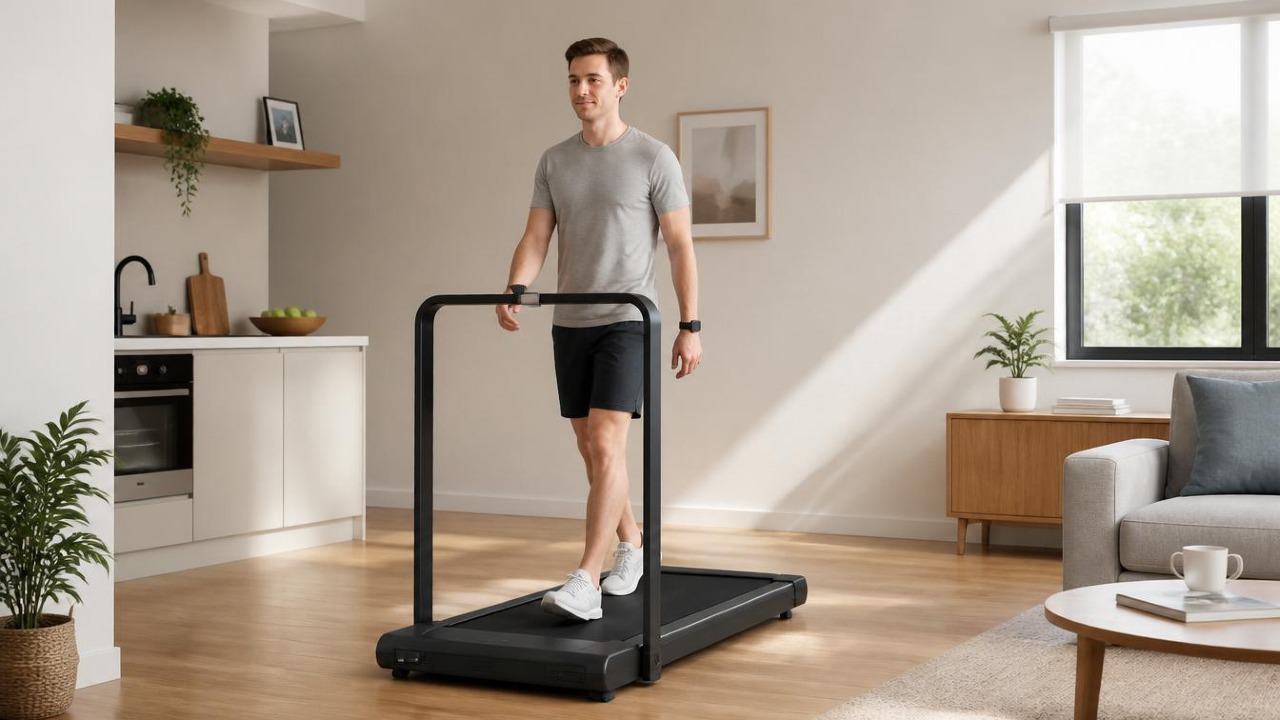
- Footprint: Unfolded, the R2 is about 145.2 x 72 cm with a low deck height; folded, it’s roughly 100 x 72 x 16.2 cm and can stand upright or slide under furniture.
Overall, the WalkingPad R2 looks best suited to small homes and flats where you want a more capable deck than ultra‑short pads can offer, but still need something that folds down small between sessions.
Key features and specs
- 2‑in‑1 design with separate walk and run modes.
- Speed range:
- Walk mode (handrail down): about 0.5–6 km/h, suitable for under‑desk walking.
- Run mode (handrail up): about 0.5–12 km/h, for jogging and light running.
- Running/walking area around 120 x 43–44 cm, wider than many basic walking pads.
- Double‑fold hinge allowing 180° folding; folded size around 100 x 72 x 16.2 cm.
- Brushless motor designed for quieter, more efficient operation.
- Maximum user weight around 110 kg (about 242 lb).
- Low deck height of roughly 6–7 cm to make stepping on/off easier and reduce impact feel.
- Adjustable handrail with safety clip for running mode.
- KS Fit app support for control and basic activity tracking.
- Integrated transport wheels for moving it when folded or unfolded.
Noise and “quiet factor”
WalkingPad markets its under‑desk and foldable treadmills as quieter than traditional running treadmills, and the R2 follows the same pattern with a brushless motor and walking‑focused design. Official and brand content around similar WalkingPad models note that proper walking treadmills typically sit in the roughly 42–57 dB range at the deck in normal walking use, where motor noise is usually lower than the sound of footsteps.
Independent reviewers who have tested the R2 describe it as very manageable for apartment use at walking speeds, with noise becoming more noticeable when running, as you’d expect from heavier impact and higher belt speed. For flats and maisonettes, that makes it a good fit for daytime walking and considerate jogging sessions, especially if you use a mat and avoid hard heel‑striking.
See the WalkingPad R2 Foldable Treadmill
Motor noise versus floor vibration
The WalkingPad R2's brushless motor is relatively quiet, but motor sound is only one part of using a walking pad in an apartment, flat or shared home. Footsteps can create structure-borne vibration that travels through wood floors, ceilings and adjoining rooms, particularly when the user walks quickly or lands heavily on the heel.
For an upstairs room, place the R2 on a dense rubber treadmill mat rather than directly on bare wood, laminate or tile. A mat can help absorb some vibration, protect the floor and keep the machine stable. Soft, supportive footwear and a smooth walking style can also reduce repeated impact.
Walking at a steady desk-friendly pace will normally create less vibration than jogging or running. Running increases belt speed and foot impact, so it is better suited to daytime use when other household members and neighbours are less likely to be disturbed.
The R2 is therefore best described as neighbour-friendly at walking speeds rather than silent. Floor construction, footwear, walking style, speed and time of day can matter as much as the motor itself.
For more practical setup guidance, read our WalkingPad R2 guide for flats, noise and storage.
Under-desk fit and ergonomics
In walk mode with the handrail folded down, the R2 sits low enough to slide under many standing desks, turning it into an under‑desk treadmill with a slightly longer and wider deck than basic pads. It’s still important to check your desk height and monitor position so you can maintain a neutral posture while walking.
The 120cm deck length gives more room for your stride than ultra‑compact pads, which can help taller users feel less cramped at 3–5 km/h. For running, raising and adjusting the handrail gives you extra stability, with a safety clip for emergency stops.
Living with it in a small home
The main reason to choose the R2 over a fixed‑frame treadmill is its folding and storage story. The double‑fold hinge lets you fold the deck in half and then drop the handrail, reducing the footprint to about 100 x 72 x 16.2 cm. You can then stand it upright against a wall, tuck it into a corner, or slide it under a bed or sofa that has enough clearance.
At around 36–40 kg, it is heavier than ultra‑light pads but lighter than many full‑size treadmills, and the built‑in wheels make shuffling it around much easier on hard floors. For small flats, that combination of decent belt size plus compact storage makes it one of the more flexible “do‑most‑things” options.
Pros
- 2‑in‑1 design: quiet walking under a desk plus running up to 12 km/h.
- Double‑folding hinge and upright storage with only 0.11 m² floor area when stored.
- Longer and wider belt than many minimal walking pads, better for natural strides.
- Brushless motor aimed at quieter, more durable operation.
- Adjustable handrail with safety cord for running mode.
- KS Fit app support for control and tracking.
Cons
- Heavier than tiny pads like Egofit, so a bit more effort to move around.
- Max user weight (around 110 kg) is lower than some office‑grade treadmills.
- Running on a compact, low‑profile deck will not feel as plush as on a full gym treadmill.
- Needs enough ceiling height and clear space around it for safe running.
Who the WalkingPad R2 is best for
The R2 is likely to suit:
- People in small homes who want both an under‑desk treadmill and a home running deck in one machine.
- Users who need a longer belt than ultra‑compact pads but still want something that folds away neatly.
- Apartment dwellers who mainly walk and occasionally jog, and are happy to keep higher‑speed running to shorter sessions.
It is less likely to suit users who only care about the smallest possible under‑desk pad (Egofit is stronger there) or those wanting heavy, high‑mileage running closer to what a full‑size treadmill offers.
Where to buy
The WalkingPad R2 is typically available from:
- WalkingPad’s own regional sites and King Smith / KingSmith storefronts.
- Major online retailers and electronics stores that stock compact treadmills.
- Local resellers and department stores under “WalkingPad R2”, “KingSmith R2” or “R2 Pro” branding.
QuietFit Lab uses affiliate links. If you buy through the links on this page, we may earn a small commission at no extra cost to you. This helps support the site and keeps our reviews independent.
See the WalkingPad R2 Foldable Treadmill)
As always, double‑check the exact model name, unfolded and folded dimensions and max user weight before buying, especially if you are tight on storage space or near the upper weight limit.
Frequently asked questions
Is the WalkingPad R2 the same as the R2 Pro?
Some regional retailers use “R2 Pro” when describing versions or packages of the WalkingPad R2, while current official WalkingPad stores generally list the model simply as the R2.
Do not assume that every R2 and R2 Pro listing has identical specifications. Before ordering, compare the model code, voltage, maximum speed, running area, user weight capacity and included accessories. Regional versions can differ even when the product images look the same.
Is the WalkingPad R2 suitable for an upstairs apartment or flat?
It can be suitable for upstairs use at moderate walking speeds, particularly when placed on a dense rubber treadmill mat. However, no walking pad is completely vibration-free. Wood floors, lightweight ceilings, fast walking and heavy heel strikes can make footsteps more noticeable in the room below.
If neighbour disturbance is a major concern, use the R2 during considerate daytime hours and begin at a slow speed to see how sound travels through the building.
Can the WalkingPad R2 be used under a standing desk?
Yes. With the handrail folded down, the R2 operates in walking mode and can fit beneath many standing desks. Check that the desk is high enough for a neutral posture and that there is adequate clearance around the treadmill.
Start at a slow pace while typing or using a mouse. Faster speeds are better reserved for walking sessions that do not require concentrated desk work.
Articles related to listings
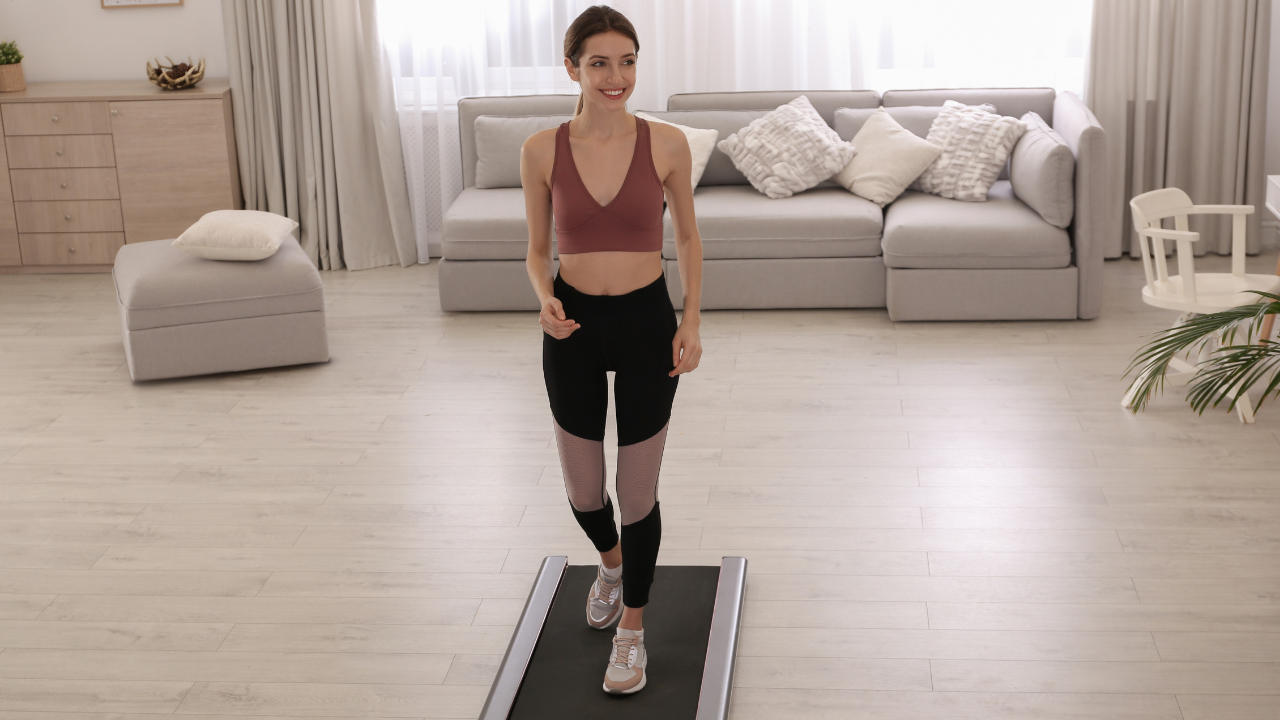
How Quiet Is a Walking Pad? What Noise Actually Feels Like in Real Life
Even the quietest walking pad still makes sound. There’s a motor running, a belt moving, and footsteps repeating in a steady rhythm. The difference is not whether noise exists—it’s how that noise behaves.
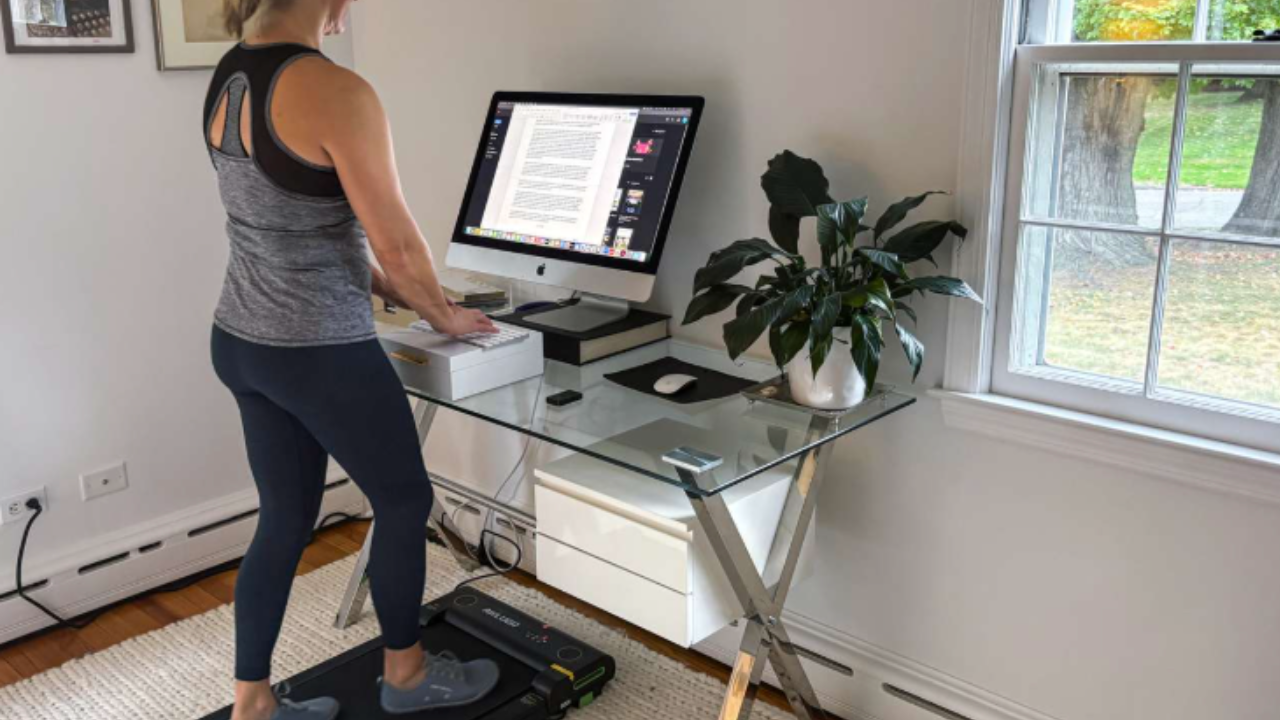
Are Walking Pads Actually Worth It for Apartment Living?
Thinking about buying a walking pad for your apartment? Learn the real pros, limitations, noise considerations, and whether walking pads are actually practical for small spaces and shared homes.
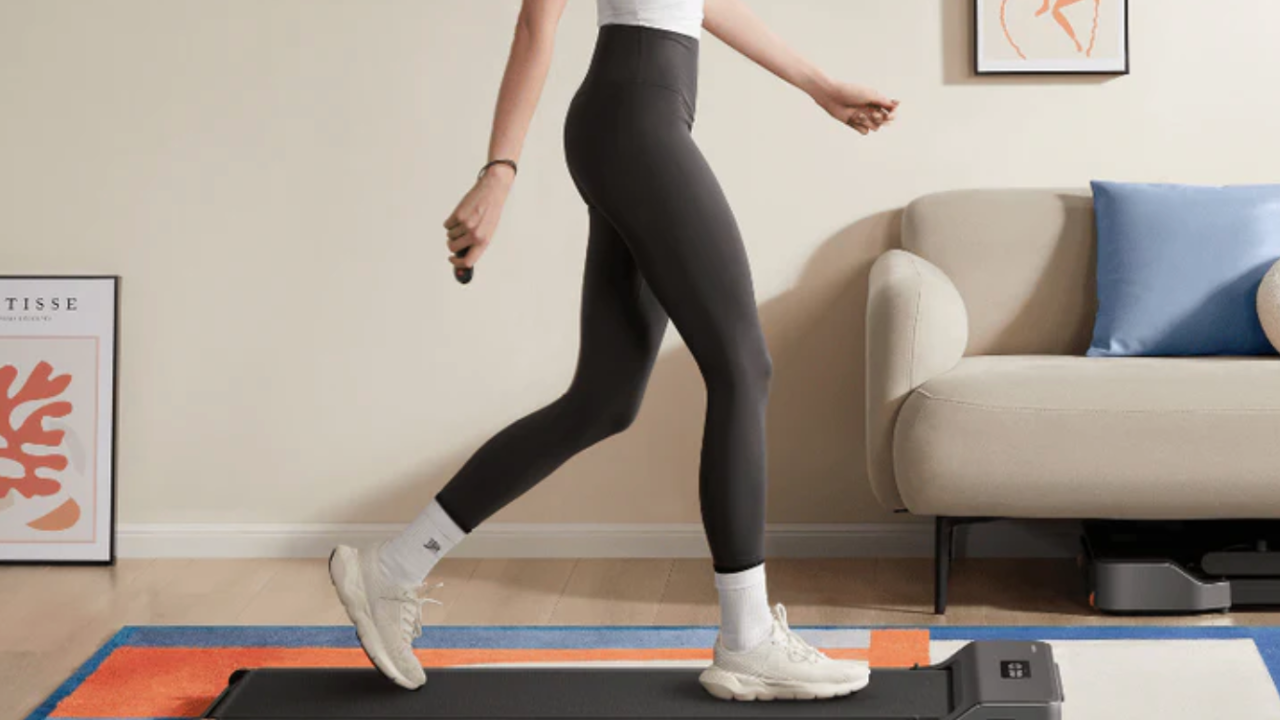
The Quietest Cardio Equipment for Early Morning Workouts
Need to work out before everyone wakes up? This guide explores the quietest cardio equipment for early morning apartment workouts, including walking pads, under-desk bikes, magnetic bikes, and low-impact cardio systems.
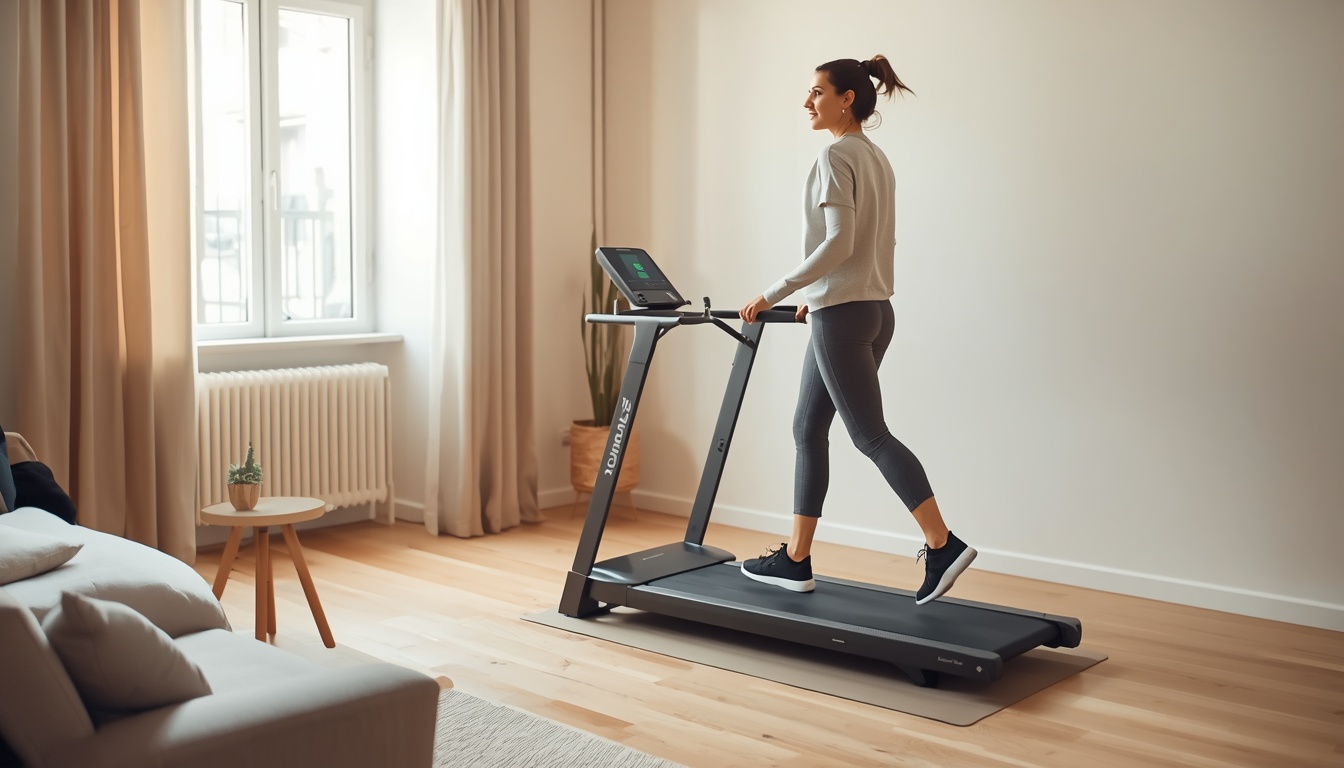
Is the WalkingPad R2 Good for Flats? Noise, Storage and Real-Life Space
Is the WalkingPad R2 good for flats and apartments? Real-world noise, floor vibration and storage advice before you buy.
Best Quiet Cardio Machines for Apartments (That Won’t Disturb Other People)
Compare the best quiet cardio machines for UK flats and apartments — walking pads, under-desk bikes, magnetic recumbents and mini steppers ranked by noise.
Similar listings in category
Explore More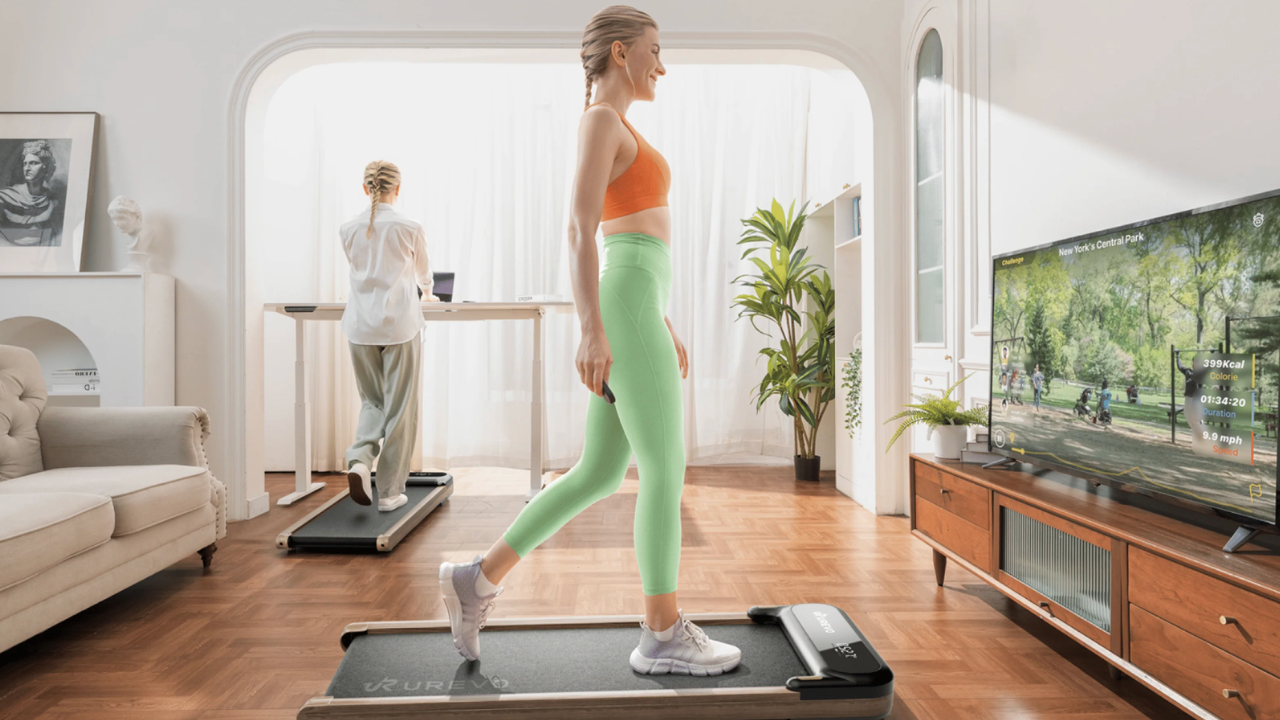
UREVO Strol 2E Pro – Quiet Smart Walking Pad with Incline | QuietFit Lab
Many people want realistic daily steps and light running in small homes without a full‑size treadmill. The UREVO Strol 2E Pro Smart Walking Pad with Incline is built for exactly those situations: a compact 2‑in‑1 treadmill with up to 12% incline, app‑linked workouts and a foldable design for home offices and flats.
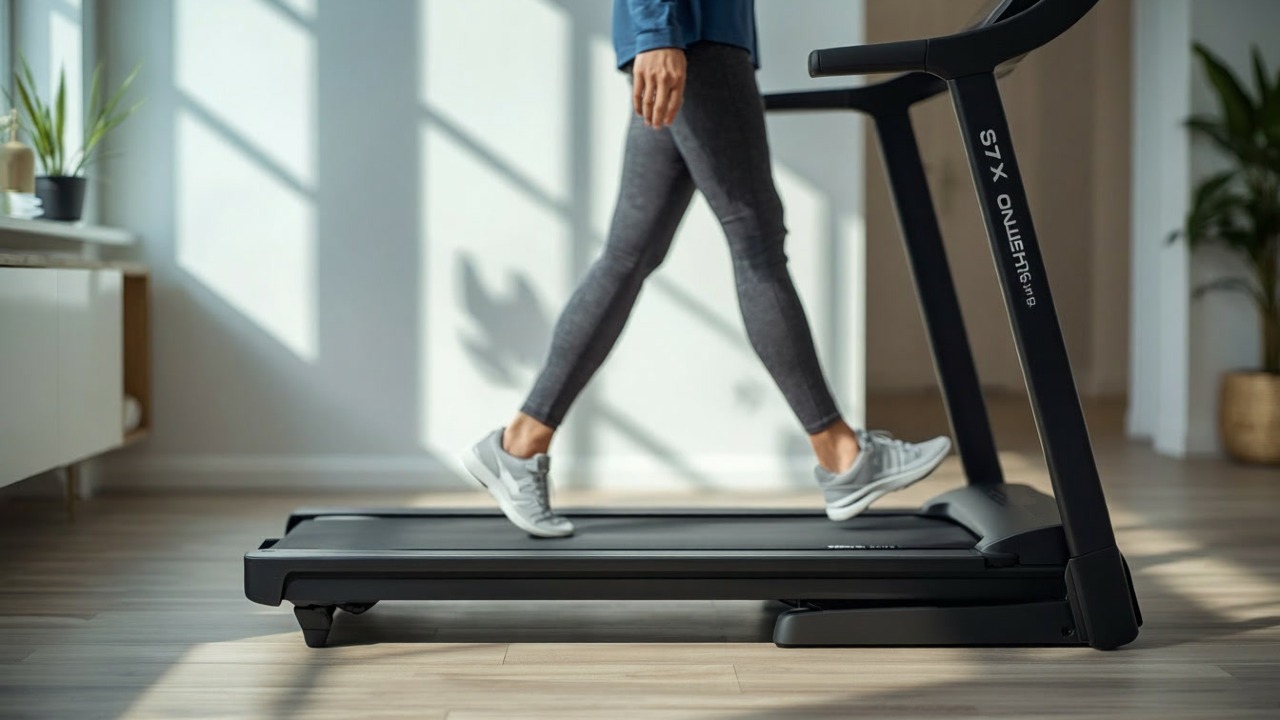
Lontek X5F Foldable Walking Pad – Quiet Incline Treadmill for Small Homes
Lontek X5F foldable walking pad – quiet 2.5 HP incline treadmill for small apartments, with compact footprint, shock absorption and <45 dB low noise.
KingSmith WalkingPad TRX21F Folding Treadmill
KingSmith WalkingPad X21 (TRX21F) folding treadmill: belt size, folded dimensions, weight limit and power figures checked across listings. Noise not tested.