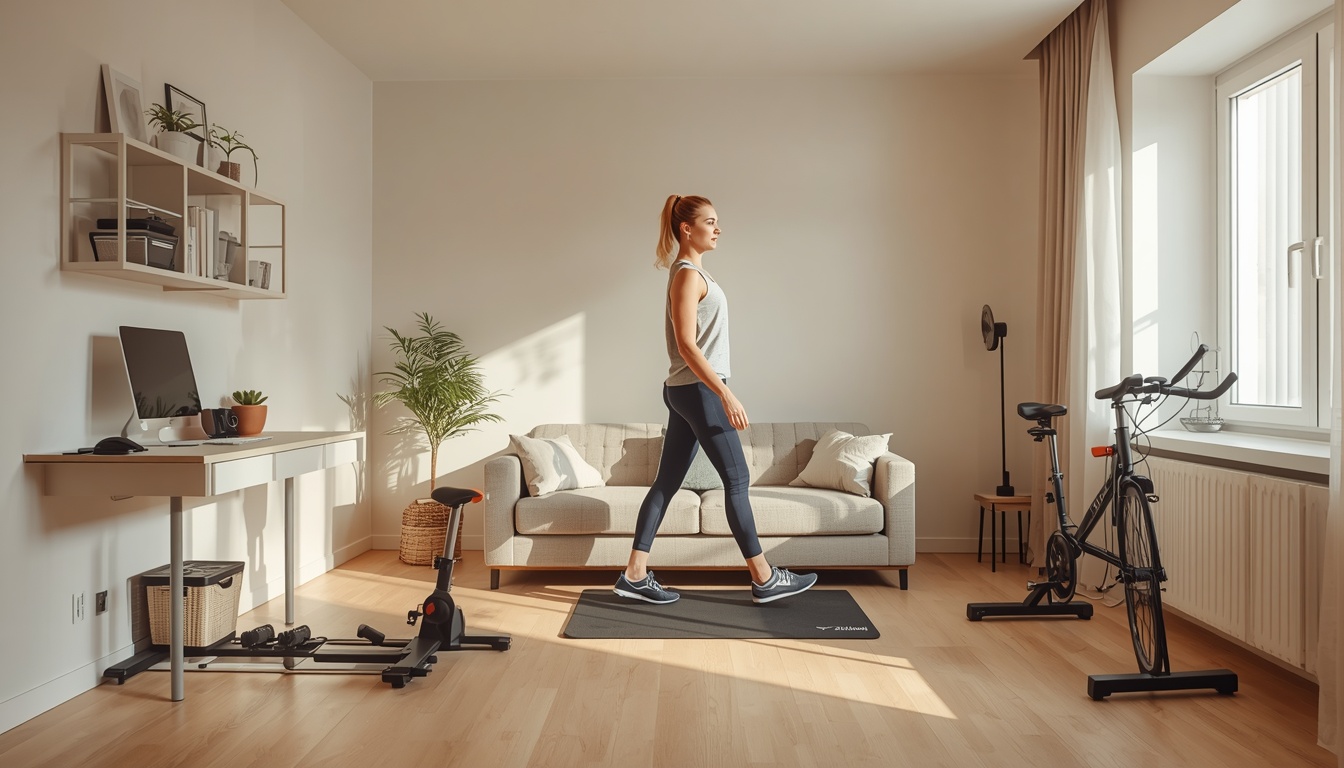
Which Merach Cardio Machine Fits Your Home? Desk, Living Room or Dedicated Workout Space.
If you are choosing home cardio equipment, the most useful question is not simply “Which machine burns the most calories?”
It is: Where will it live, when will you use it, and will it suit the people around you?
A machine can look perfect on a product page but become difficult to use if it takes over the living room, feels too loud for a shared home, or cannot be stored when guests arrive. The right choice depends on whether you need subtle movement at a desk, everyday cardio in a living room, or a more substantial machine for a spare room or dedicated workout area.
This guide helps you match Merach cardio equipment to the kind of space and routine you actually have.
>QuietFit Lab uses affiliate links. If you buy through links on this page, we may earn a small commission at no extra cost to you. This helps support the site and keeps our guides independent.
1. Under a desk: movement while you work
If you work from home, spend long periods sitting down, or do not have room for a full-size cardio machine, desk-friendly equipment is often the simplest starting point.
Mini ellipticals and under-desk pedal trainers are designed for seated movement. They can sit beneath a desk, in front of a sofa, or beside a favourite chair, allowing you to pedal gently while working, reading or watching television.
They are usually best for:
- Light, regular movement rather than high-intensity cardio.
- Shared homes where low noise matters.
- Small rooms where a treadmill or full exercise bike would feel too large.
- People who prefer seated, low-impact exercise.
2. In the living room: walking pads and compact cardio
The trade-off is that the movement is smaller and less like a full walk or cycle session. But for someone who wants to move more without creating a dedicated home gym, that can be exactly the point.
A living-room cardio setup needs to be easy to live with. It should be stable enough to feel safe, but compact enough that it does not permanently change how the room works.
Walking pads are a good fit for people who want natural movement while watching TV, listening to a podcast or taking breaks from desk work. Compared with a traditional treadmill, they are usually designed around walking rather than hard running, which can make them a more realistic option for everyday use at home.
Before choosing one, think about:
- Floor space: Measure the open area you have when the machine is in use, not only the space available for storage.
- Noise and vibration: A walking pad makes a motor hum and repeated footfall noise, so a mat and sensible daytime use can make a big difference.
- Storage: Foldable models make more sense when the living room is also your main shared space.
- Your routine: A machine that is simple to roll out for a 20-minute walk is often more useful than a larger machine you avoid setting up.
For a closer look at what walking-pad noise feels like in a real flat or shared home, see QuietFit Lab’s guide to how quiet walking pads actually feel in real life
An indoor exercise bike is often the best middle ground between compact size, low-impact cardio and a more structured workout.
Magnetic-resistance bikes are particularly worth considering for home use because they are designed for smooth resistance changes and quieter operation than friction-based systems. They still need a stable surface and enough clearance around the frame, but they are usually easier to accommodate than a large treadmill or elliptical.
A bike makes most sense if you want:
- A more focused cardio session than a mini trainer provides.
- Lower-impact movement compared with running.
- Adjustable resistance for gradual progression.
- Equipment that can sit in a spare room, a roomy bedroom or a dedicated corner.
For an example of a screen-led magnetic bike, see QuietFit Lab’s guide to the Merach S26 Magnetic Bike It is a more substantial option than desk cardio, so it is best suited to a home with a reliable permanent workout space.
4. In a dedicated workout space: larger equipment
If you have a spare room, garage gym or a dedicated workout area, you can consider larger machines without forcing them into everyday living space.
Rowing machines, heavier exercise bikes and larger treadmills can offer a more demanding or full-body workout. However, they usually need more clearance, more deliberate setup and more consideration for floor protection, especially in upstairs rooms.
Within MERACH's range, the rowers split by resistance type rather than size. The MERACH Q1S magnetic rower uses 16 levels of magnetic resistance with no fan roar or sloshing tank, which makes it the easiest of the three to use early or late in a flat. The MERACH R15 Pro electromagnetic rower adds plug-in electromagnetic resistance and upright or track-folding storage. The MERACH R28 water rower trades quietness for feel: water resistance produces a steady whoosh on every stroke, and it folds 180 degrees vertically on bottom wheels.
These options are best for people who:
- Have a room where equipment can remain in place.
- Want longer or more structured training sessions.
- Need a larger range of resistance or a more substantial training feel.
- Can manage the extra floor space, machine weight and potential vibration.
A larger machine is not automatically better. In a compact home, the best equipment is usually the one that fits your routine without creating stress for you, your neighbours or the people you live with.
5. A simple way to choose
Use this as a quick starting point.
If you need gentle seated movement
Start with desk-friendly cardio or a mini elliptical.
If you want natural walking in a shared living space
Start with a compact or foldable walking pad.
If you want regular low-impact cardio with adjustable resistance
Start with a magnetic exercise bike.
If you have a dedicated room and want full-body training
Start with a rowing machine or a larger home-gym machine.
Final thought
The best cardio machine is not necessarily the biggest, most powerful or most advanced model.
It is the one that fits your available room, your noise limits and the routine you can maintain consistently. A compact mini trainer may be ideal for one person; another may have room for a magnetic bike or rower that makes training feel more purposeful.
For the complete selection—including desk-friendly cardio, walking pads, exercise bikes and rowing machines—visit [QuietFit Lab’s Merach shop]