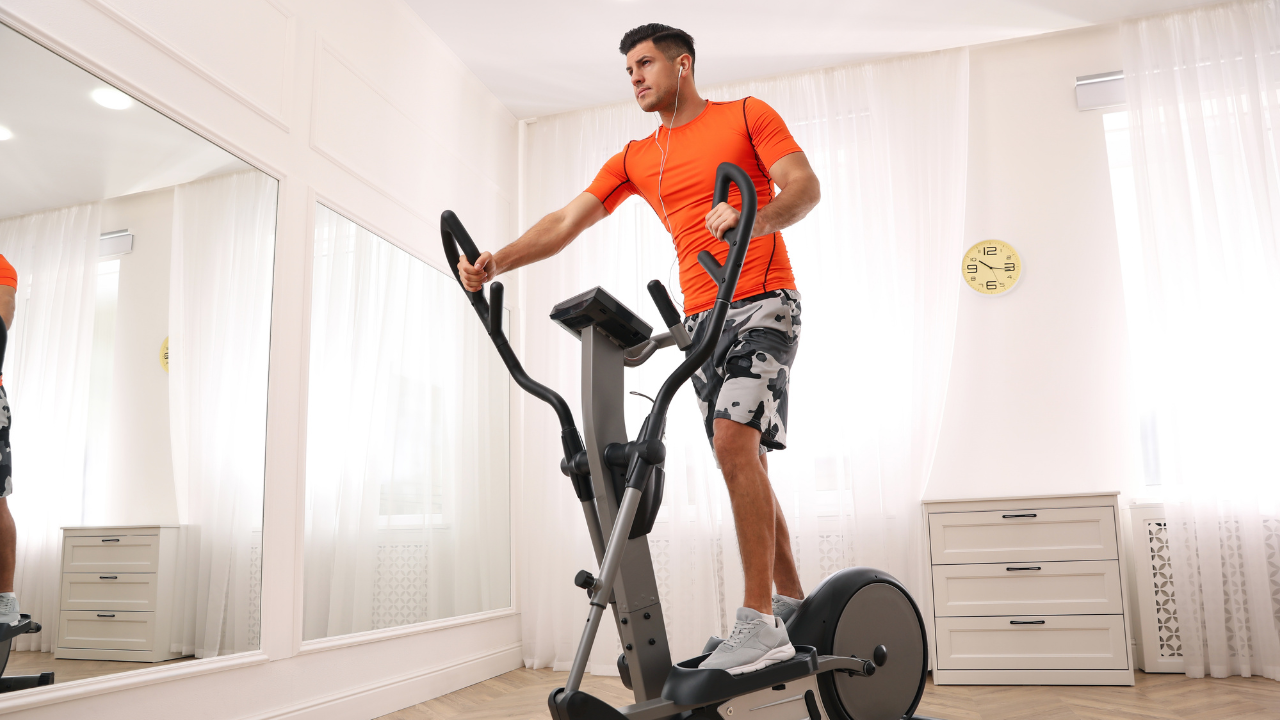
There’s a version of working out at home that looks effortless.
You wake up, move your body, maybe get a walk in or a short workout, and then carry on with your day. No commute, no waiting, no disruption.
That version assumes something most people don’t actually have:
Space that belongs entirely to them.
In reality, most home environments are shared. Apartments, family homes, multi-use rooms. Someone is usually nearby. Someone is resting, working, or simply existing in the same space.
So the real question becomes less about motivation and more about impact.
Can you move your body without disrupting someone else’s day?
That’s where quiet cardio stops being a feature and becomes a constraint.
Why Most Home Workouts Don’t Translate to Shared Spaces
A lot of home fitness advice is built around ideal conditions.
- Dedicated workout areas
- Sound separation between rooms
- No concern about floor vibration
- The freedom to be loud, fast, or high-impact
Most people don’t live like that.
What actually happens is simpler:
- You hesitate before starting
- You lower intensity to avoid noise
- You skip workouts because the timing isn’t right
It’s not that the intention isn’t there. It’s that the environment pushes back.
QuietFit Lab uses affiliate links. If you buy through the links on this page, we may earn a small commission at no extra cost to you. This helps support the site and keeps our reviews independent.
What “Disturbing Others” Actually Means
It’s easy to think of noise as volume.
But in shared living, disruption is more specific than that.
It’s:
- repetitive impact (like footsteps or jumping)
- vibration through floors or furniture
- unpredictable or sudden sounds
- anything that breaks the normal rhythm of a room
A loud but steady sound can be easier to live with than a quiet but irregular one.
This is why certain machines that are technically “quiet” still feel disruptive.
Why Walking Pads Became the Default Solution
Walking pads exist because they remove the most disruptive parts of cardio.
No jumping. No impact spikes. No sudden changes in movement.
Instead, they create:
- continuous motion
- controlled pacing
- predictable sound
Machines like the UREVO SpaceWalk E4W or the WalkingPad R2 are built around this idea.
They don’t eliminate noise, but they shape it into something that can coexist with normal life.
You can walk while someone is working nearby. You can move without changing the tone of the entire room.
That’s the difference.
Where Walking Pads Still Fall Short
Even the best walking pad doesn’t disappear completely.
You still have:
- a motor running
- footsteps repeating
- subtle vibration
In a busy environment, this blends in.
In a quiet one, it becomes noticeable.
This is where expectations matter. If you’re trying to be completely undetectable, walking pads aren’t the answer.
They are a middle ground.
Rowing is the usual blind spot here. It is seated, so there is no foot impact travelling through the floor, and hydraulic machines have no fan or motor at all. The Sunny SF-RW1205SMART compact hydraulic rower uses a single cylinder with 12 knob-adjusted tension levels and weighs about 10.2 kg, so it lifts out of the way between sessions. The Sunny SF-RW5639SMART full motion rower offers the same 12 hydraulic levels with pivoting arms and needs no mains power. The main sounds are the seat rollers and the handles, not the resistance.
The Role of Invisible Movement
This is where under-desk machines come in.
Devices like the DeskCycle 2 or the Cubii Move take a different approach.
Instead of replicating walking, they remove impact entirely.
- no footsteps
- no floor vibration
- minimal mechanical noise
The movement becomes almost invisible.
This is the closest you get to working out without anyone noticing.
But there’s a trade-off.
The movement is smaller. Less natural. Less intense.
You gain quiet, but you lose some physical engagement.
Short Burst Cardio and Why It’s Harder to Hide
Steppers sit on the opposite end.
Machines like the MERACH Mini Stepper are compact and effective, but they introduce:
- vertical motion
- weight shifts
- more noticeable rhythm
They’re still quieter than jumping or running, but they are harder to blend into the background.
They work best when:
- used for short sessions
- timed around when others are active
- not relied on for long, continuous workouts
They solve efficiency, not invisibility.
Why Timing Matters More Than the Machine
One of the biggest misconceptions is that the right equipment solves everything.
In reality, timing often matters more than the machine itself.
The same walking pad can feel:
- perfectly fine at 2 PM
- completely disruptive at 10 PM
The environment changes.
People are more sensitive to sound when:
- they’re resting
- the space is quiet
- there’s no background noise to absorb it
This means successful home workouts in shared spaces are often about rhythm:
- when you move
- how long you move
- what else is happening around you
What Actually Works in Real Life
If you step back, most people who successfully maintain movement at home don’t rely on one perfect solution.
They combine approaches.
For example:
- under-desk cycling during work hours
- walking pad sessions during the day
- short stepper sessions when space allows
Each one fits a different moment.
This reduces friction.
Instead of forcing one machine to solve everything, the system adapts to the environment.
The Mental Side of Quiet Movement
There’s also a psychological layer that doesn’t get talked about enough.
When you feel like you might disturb someone, you hesitate.
Even if the machine is technically quiet, that hesitation can be enough to stop you from starting.
The best quiet cardio setups remove that doubt.
You don’t have to think:
- Is this too loud?
- Will this bother someone?
You just use it.
That confidence matters more than small differences in performance.
What You Should Actually Prioritize
If your environment is shared, your priorities shift.
Instead of asking:
- “What burns the most calories?”
You start asking:
- “What can I use consistently without friction?”
That usually leads to:
- lower-impact movement
- longer duration
- quieter systems
It’s not less effective. It’s more sustainable.
So, Can You Work Out Without Disturbing Roommates?
Yes—but not in the way most people expect.
You’re not eliminating sound completely.
You’re choosing movement that:
- stays within normal daily noise levels
- avoids impact and vibration
- fits into the rhythm of your space
That’s what makes it workable.
Final Perspective
Quiet cardio is not about finding the perfect silent machine.
It’s about understanding the environment you’re in and choosing tools that respect it.
Some days that means walking.
Some days that means seated movement.
Some days that means shorter sessions.
The goal isn’t to force fitness into your space.
It’s to let it exist there naturally.
Bottom Line
You can work out without disturbing roommates—but only if the movement fits the environment.
The best approach is not the most intense or the most advanced.
It’s the one that feels normal enough to do regularly, without second-guessing whether someone else can hear it.